

By ChinaSpecSteel | Validated for 2026 Sourcing Strategies
In the complex ecosystem of global manufacturing, 2026 marks a decisive shift in how specialty steel is sourced. The era of buying steel based solely on “Spot Price” is over. For International steel traders, OEM procurement managers, and EPC contractors, the new battlefield is defined by supply chain resilience, metallurgical precision, and carbon compliance.
This guide is not merely a list of products. It is a strategic document designed to help you navigate the global steel landscape, understand the technical nuances of “Specialty Steel” , and reveal how ChinaSpecSteel—leveraging the immense production power and quality control of Jiyuan Steel Group—bridges the gap between Chinese industrial might and global engineering standards.
The Strategic Landscape of 2026
1. The “Two-Track” Demand Surge
As we move deeper into 2026, global demand for specialty steel has bifurcated into two distinct tracks, creating tighter supply for high-grade alloys.

Track A: The Energy Transition: The explosion of the EV (Electric Vehicle) market and wind power sectors has created unprecedented demand for high-purity gear steels and bearing steels. Wind turbine gearboxes require steel with ultra-low oxygen content to withstand gigacycle fatigue loads.
Track B: Precision Manufacturing: As supply chains diversify, there is a rising demand for mold steels and alloy structural steels in emerging manufacturing hubs like Southeast Asia and Mexico. However, these hubs often lack local high-grade steel production, necessitating reliable imports from established steel powers like China.

2. The China Advantage: Scale Meets Sophistication
Historically, buyers looked to Germany or Japan for “High-End” and China for “Commodity.” In 2026, this distinction has blurred. Leading Chinese mills, particularly Jiyuan Steel Group, have invested billions in secondary refining technologies (LF+VD/RH) and continuous casting upgrades. China is no longer just the volume leader; it is the value-for-money leader in the mid-to-high-end spectrum (e.g., Bearing Steel, Gear Steel, and Spring Steel).
3. Pricing Mechanics: The “Green Premium”
A critical factor for 2026 procurement is the impact of global decarbonization. With the EU’s CBAM (Carbon Border Adjustment Mechanism) fully operational, steel is now priced with a “Carbon Tag.”
- The Cost of Carbon: Procurement managers must now factor in the carbon intensity of the steel. EAF (Electric Arc Furnace) steel, though often more expensive to produce than Blast Furnace steel, may offer a lower landed cost in Europe due to lower carbon taxes.
- Alloy Surcharges: Volatility in Molybdenum, Nickel, and Vanadium continues to drive price fluctuations in grades like 4140 (42CrMo) and 8620.
Technical Framework & Classification
To procure effectively, one must speak the language of metallurgy. At ChinaSpecSteel, we ensure that what you order is exactly what you get, down to the microscopic inclusion rating.
1. Material Systems and Application Mapping
We categorize our supply capability into high-performance clusters:

- Alloy Structural Steel (The Backbone):
- Key Grades: AISI 4140, 4130, 4340, 5140, 8620.
- Application: Automotive axles, crankshafts, fasteners, and heavy machinery components.
- Critical Quality: Jominy Hardenability consistency is key here. Jiyuan Steel controls the hardenability band to a very narrow range (e.g., ±3 HRC), ensuring consistent heat treatment response for the end-user.
- Bearing Steel (The Precision Class):
- Key Grades: AISI 52100, DIN 100Cr6, JIS SUJ2.
- Application: Ball bearings, rollers, wind turbine slewing rings.
- Critical Quality: Fatigue life. This requires ultra-high purity. We utilize vacuum degassing (VD) to remove hydrogen and minimize non-metallic inclusions (oxides/sulfides).
- Spring Steel:
- Key Grades: AISI 5160, 9260, SUP9.
- Application: Automotive suspension, railway clips.
- Critical Quality: Surface quality. Even micro-cracks can lead to catastrophic failure under cyclic loading. Our peeling and grinding lines ensure defect-free surfaces.
2. The Impact of Processing Routes
A grade like “AISI 4140” is just a chemical recipe. The performance comes from the cooking method.
- EAF vs. BOF: Jiyuan Steel operates advanced lines. While BOF (Blast Furnace) provides high purity from virgin iron ore, EAF (Electric Arc Furnace) allows for precise scrap utilization and alloy tuning.
- Secondary Metallurgy (The Secret Sauce): Standard steel is melted and cast. Premium steel undergoes LF (Ladle Furnace) for temperature control and desulfurization, and VD (Vacuum Degassing) to remove hydrogen (preventing flakes).
- Continuous Casting vs. Ingot Casting: For large diameter bars (e.g., >800mm), ingot casting with heavy forging reduction is necessary to close internal voids. For standard bars, continuous casting with EMS (Electromagnetic Stirring) ensures homogeneity.
International Standards & The “Equivalence Trap”
One of the most frequent points of failure in international trade is the assumption that “Equivalent” means “Identical.” It does not.
1. The Cross-Reference Matrix
- USA: ASTM / AISI / SAE (Chemistry focused)
- Europe: EN / DIN (Performance and Chemistry focused)
- Japan: JIS (Often stricter on P and S impurities)
- China: GB / YB (Harmonized with ISO, but with tiered quality levels)
2. Case Study: The 42CrMo Risk
Consider the common request: “I need 4140.”
- AISI 4140 allows Sulfur up to 0.040%.
- EN 42CrMo4 typically requires Sulfur under 0.035%.
- Jiyuan Steel’s “Superior” 42CrMo: We produce to an internal standard that typically holds Sulfur below 0.015% or even 0.005% for high-end applications.
- The Trap: If you buy “generic” 4140 from a stockist without specifying the standard, you might get high-sulfur material that cracks during welding or has poor transverse impact toughness. ChinaSpecSteel technical teams review every drawing to ensure the exact sub-grade is selected.
The Procurement Decision Model
Successful procurement in 2026 utilizes a Total Cost of Ownership (TCO) model.
1. Beyond the Price Tag
Cheaper steel often costs more.
- Unit Price: The visible cost per ton.
- Yield Loss: If the steel has surface defects, you lose 5-10% in turning/peeling. ChinaSpecSteel can supply “Bright Bars” (Peeled/Polished) to eliminate this risk for you.
- Machinability: Inconsistent hardness wears out CNC tools faster. Our controlled cooling (TMCP) ensures uniform microstructure, extending your tool life by up to 20%.
- Financing Cost: Long lead times tie up capital. We offer flexible payment terms for long-term partners.
2. The ChinaSpecSteel Solution: Factory Direct + Service Agility
Buying directly from a massive mill can be difficult for overseas buyers due to rigid MOQs (Minimum Order Quantities) and communication barriers. ChinaSpecSteel operates as the specialized export interface:
- Consolidation: We can combine 20 tons of 4140, 10 tons of 5140, and 5 tons of Tool Steel into a single shipment. Most mills would reject this mix.
- Risk Buffer: We perform the “Last Mile” quality check before the steel leaves the port.
- Jiyuan Pedigree: You get the original Mill Test Certificate (MTC) from Jiyuan Steel Group, ensuring full traceability.
Supplier Evaluation & Quality Assurance
How do you audit a supplier from 5,000 miles away? You demand transparency.
1. The 3-Point Audit Checklist
- Melting Capability: Does the mill have LF+VD? (Essential for special steel).
- Inspection Equipment: Do they have in-house Ultrasonic Testing (Automatic and Manual), Spectrometers, and Metallurgical Microscopes?
- Certifications: Look for IATF 16949 (if automotive), API Q1 (if oil & gas), and ISO 17025 (Lab accreditation).
2. Anti-Counterfeit & Traceability
In the steel trade, fake certificates are a plague.
- Our Process: Every bundle of steel we ship has a heat-resistant, barcode-scannable tag.
- Digital MTC: Our MTCs are digitally linked to the Jiyuan Steel production database.
- Chemistry Verification: We invite clients to hire SGS/Intertek/BV for random sampling at our warehouse before loading.
Logistics, Packaging & Trade Compliance
Getting the steel to your door without rust or damage is an art form.
1. Packaging Standards
- Anti-Corrosion: We do not just wrap steel; we preserve it. We use VCI (Volatile Corrosion Inhibitor) wrapping + heavy-duty plastic + woven strips.
- Structural Integrity: For slender bars (e.g., <20mm), we use wooden boxing to prevent bending during crane handling.
- Identification: Color-coding on bar ends to prevent grade mix-ups at your warehouse.
2. Customs & Compliance
- HS Codes: Correct classification is vital to avoid fines or overpaying duties. We assist in identifying the correct HS Code (e.g., 7228 series for alloy bars).
- Incoterms 2020: We recommend DDP (Delivered Duty Paid) for smaller buyers to remove hassle, or CIF for experienced importers.
Industry-Specific Solutions
1. Automotive & New Energy Vehicles (NEV)

Challenge: High strength-to-weight ratio needed.
Solution: Micro-alloyed steels (Vanadium/Niobium treated) that maintain strength after heat treatment.
Our Supply: Gear shafts, constant velocity joints (CVJ), and stabilizer bars.
2. Oil & Gas
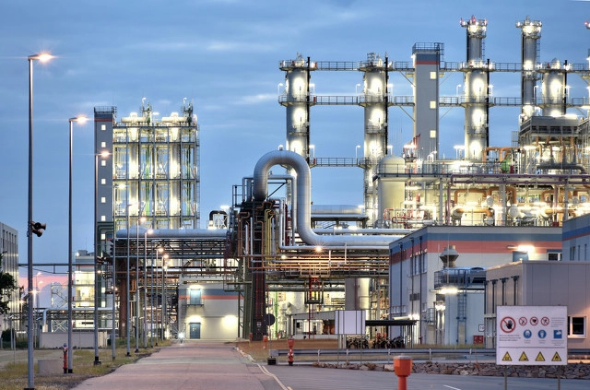
Challenge: H2S environment (Sour Service) causing sulfide stress cracking.
Solution: AISI 4130/4140 MOD with restricted hardness and NACE MR0175 compliance.
Our Supply: Drill collars, valve blocks, and high-pressure flanges.
3. Engineering Machinery

Challenge: Extreme impact and wear.
Solution: High-wear resistant grades and through-hardening steels.
Our Supply: Excavator pins, track bushings, and hydraulic cylinder rods.
Future Trends – 2026 and Beyond
1. The Rise of “Digital Steel”
The future is data. ChinaSpecSteel is integrating blockchain technology to create an immutable record of the steel’s journey—from the specific mix of scrap/ore used in the furnace to the final delivery at your dock.
2. Customized Metallurgy
We are seeing a trend towards “Designer Steels”—modifying standard grades (like adding 0.02% Boron or adjusting the Manganese ratio) to achieve specific mechanical properties without jumping to a more expensive alloy class. Jiyuan Steel’s R&D center allows us to run these pilot heats for qualified customers.
The 2026 market offers immense opportunities for those who professionalize their procurement. By moving from transactional buying to strategic partnering, you unlock cost savings, quality stability, and supply chain security.
ChinaSpecSteel stands ready to be that partner. Backed by the industrial might of Jiyuan Steel Group, we offer the perfect blend of mill-direct power and trading-house agility. We don’t just deliver steel; we deliver confidence.
Ready to optimize your 2026 steel supply chain? Contact Our Engineering Team for a Technical Consultation
FAQ: Frequently Asked Questions
1. How can I verify the authenticity of the Mill Test Certificate (MTC) provided by ChinaSpecSteel?
Transparency is our core value. All our MTCs originate directly from Jiyuan Steel Group’s quality system. You can verify the “Heat Number” and “Batch Number” via the QR code on the certificate or by contacting the mill’s quality department directly. We also welcome 3rd party verification (SGS/Bureau Veritas) before shipment.
2. Does Chinese specialty steel meet European and American high-end standards?
Absolutely. The “Tier 1” Chinese mills, including Jiyuan Steel, are equipped with state-of-the-art equipment from Siemens-VAI and Danieli. We regularly supply steel that meets and exceeds ASTM A29, EN 10083, and high-cleanliness bearing steel standards (DIN 100Cr6). The key is selecting the right grade and quality level (e.g., requesting VD/ESR routes).
3. What is the difference between “Generic” 4140 and “High-Quality” 4140?
The difference lies in the “Cleanliness” and “Hardenability.” Generic 4140 may have higher inclusions (sulfur/phosphorus) and a wide hardness range. Our High-Quality 4140 undergoes Vacuum Degassing (VD) to remove impurities and has a restricted hardenability band (H Band), ensuring it reacts consistently to heat treatment in your factory.
4. How do you handle the “Equivalence” between standards (e.g., AISI vs. GB)?
We do not simply guess. We use a strict metallurgical comparison matrix. For example, when you ask for AISI 4140, we supply GB 42CrMoA. While they are 98% similar, we ensure the specific chemical adjustments (like Mn or Cr content) meet your specific drawing requirements. We always ask for the end-application to ensure the match is performance-equivalent, not just name-equivalent.
5. How will the 2026 Carbon Tax (CBAM) affect my steel price?
If you are importing into the EU, you will need to declare the embedded carbon emissions. ChinaSpecSteel provides detailed carbon footprint data for our products. While this adds a compliance step, sourcing from our EAF (Electric Arc Furnace) lines can significantly reduce the carbon tax burden compared to traditional BF-BOF steel.
6. Can you handle small trial orders or mixed loads?
Yes. This is the primary advantage of working with ChinaSpecSteel versus going direct to a massive mill. We can consolidate different grades (e.g., 5 tons of Round Bar + 5 tons of Flat Bar) into a single container, allowing you to test our quality without committing to hundreds of tons initially.
7. How do you prevent rust during 40+ days of sea shipping?
We take corrosion very seriously. Our standard export packaging includes: 1. Anti-rust oil coating. 2. Wrapping in VCI (Volatile Corrosion Inhibitor) paper. 3. Encasing in woven plastic sheets. 4. For bright bars, we use wooden boxes. We guarantee the material arrives in the same condition it left the factory.
8. What is the typical lead time for custom rolled sizes?
For standard grades (4140, 4340, 1045) kept in stock, we ship within 7-10 days. For custom rolling or special heat-treated orders (QT/Annealed), the cycle is typically 35-50 days depending on the mill’s rolling schedule. We provide a weekly production status report so you are never in the dark.
9. Do you offer “Bright Bar” or only “Black Bar”?
We offer both. We have peeling, centerless grinding, and polishing lines. Buying Bright Bar (Tolerance h9, h10, h11) from us saves you freight costs (you don’t ship the “skin” weight) and eliminates the risk of surface cracks, as the defect layer is removed at our factory.
10. Why should I choose ChinaSpecSteel over a local distributor in my country?
Cost and Direct Communication. By buying from us, you cut out the middleman layers. You get “Mill-Direct” pricing with the added service of an export team that speaks English and understands international trade terms. Plus, our connection to Jiyuan Steel gives you access to technical resources (metallurgists) that local distributors simply cannot offer.


 English