
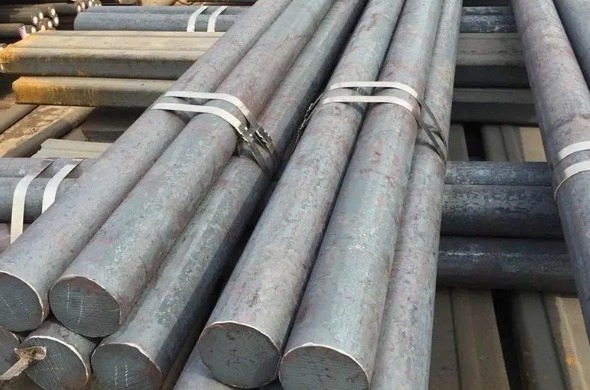
The Definitive Technical Guide to Bearing Steel Round Bar (GCr15 / AISI 52100): Properties, Manufacturing, and Industrial Applications
In the highly specialized field of mechanical engineering, the longevity and reliability of rotating machinery depend fundamentally on the metallurgical quality of the components that support motion. Among the most critical materials in this domain is the high-carbon chromium bearing steel, known internationally as GCr15 or AISI 52100. This material is specifically engineered to endure the extreme hertzian contact stresses associated with rolling elements. At Chinaspecsteel, we recognize that for global procurement teams and design engineers, sourcing the right grade of steel is not merely a matter of chemical compliance but a pursuit of extreme purity and structural homogeneity. This technical guide explores the intricacies of this material, highlighting why high-performance industrial systems rely on premium-grade bearing steel solutions.
As a leading supplier with deep roots in the Chinese manufacturing ecosystem, Chinaspecsteel bridges the gap between the massive production capacity of premium Chinese mills and the exacting standards required by international heavy machinery and automotive sectors. Whether it is a standard Bearing Steel Round Bar for a ball bearing race or a specialized Bearing Steel Square Bar for heavy machinery linear guides, the material must exhibit a level of fatigue resistance that exceeds standard engineering alloys. In the following sections, we provide a deep dive into the properties, manufacturing protocols, and sourcing strategies that define modern bearing steel excellence.
Technical Specifications and Bearing Steel Round Bar properties
The performance of any bearing component is a direct function of its microstructural characteristics. When evaluating Bearing Steel Round Bar properties, engineers must look beyond the macro-level hardness and consider the distribution of carbides and the absence of non-metallic inclusions. The primary grade utilized globally, GCr15, is characterized by its high carbon content (approximately 0.95% to 1.05%) and its chromium content (1.30% to 1.65%). This chemistry is designed to create a hard, wear-resistant surface while maintaining enough core toughness to resist cracking under cyclical loads.
The presence of chromium is particularly significant. It increases the hardenability of the steel, allowing for a uniform martensitic structure throughout the cross-section of the bar during heat treatment. Furthermore, chromium reacts with carbon to form complex carbides that are exceptionally hard and stable at operational temperatures. In terms of mechanical benchmarks, the SAE 52100 steel properties include a high modulus of elasticity (approximately 210 GPa) and a density of roughly 7.81 g/cm3 (ρ ≈ 7.81 g/cm3). These physical constants are critical for calculating the resonant frequencies and load-bearing capacities of high-speed spindles and rotating shafts.
Beyond standard chemistry, the real differentiator in Bearing Steel Round Bar properties is the level of “micro-cleanliness.” Modern standards such as ASTM A295 specify extremely tight limits on oxygen, titanium, and sulfur. Oxygen, in particular, leads to the formation of brittle oxide inclusions which act as stress concentrators. At Chinaspecsteel, we ensure that our bearing steel undergoes rigorous vacuum degassing to keep oxygen levels below 10 ppm (parts per million), which exponentially increases the rolling contact fatigue life of the finished components compared to standard industrial grades.
| Element | Composition (wt %) |
|---|---|
| Carbon (C) | 0.95 – 1.05 |
| Chromium (Cr) | 1.30 – 1.65 |
| Manganese (Mn) | 0.25 – 0.45 |
| Silicon (Si) | 0.15 – 0.35 |
| Phosphorus (P) | ≤ 0.025 |
| Sulfur (S) | ≤ 0.025 |
Manufacturing Process: Inclusion Control and ESR Refining
The manufacturing of high-quality bearing steel is an exercise in purity control. The journey from scrap or iron ore to a precision Bearing Steel Round Bar involves several stages of sophisticated metallurgy. At Chinaspecsteel, we partner with mills that utilize Electric Arc Furnace (EAF) melting followed by Ladle Furnace (LF) refining. However, the standard refining process is often insufficient for the most demanding applications, such as aerospace bearings or high-speed railway components.
To achieve the highest possible standards, we advocate for the use of Electroslag Remelting (ESR). In the ESR process, a previously cast ingot of bearing steel is used as a consumable electrode. This electrode is slowly remelted through a layer of chemically active slag. As the molten metal droplets pass through the slag, impurities like sulfur and non-metallic inclusions are chemically stripped away. The resulting ingot solidifies in a water-cooled mold, which prevents macro-segregation and ensures a fine, uniform grain structure. This refinement is essential for ensuring that the SAE 52100 steel properties remain consistent across the entire length and diameter of the bar.
Following the refining stage, the steel is subjected to controlled rolling. Temperature control during rolling is vital to prevent the formation of a pro-eutectoid carbide network, which can lead to brittleness. After rolling, the bars undergo spheroidizing annealing. This process involves heating the steel to just above its critical temperature and cooling it very slowly, causing the lamellar carbides to transform into small, spherical particles. This “spheroidized” state is the ideal starting point for machining, as it reduces tool wear and provides a uniform response to subsequent hardening treatments.
Why Choose Bearing Steel Square Bar for heavy machinery?
While the round bar format is the industry standard for traditional rotating bearings, modern industrial automation and heavy-duty manufacturing have seen an increased demand for square and rectangular profiles. Choosing a Bearing Steel Square Bar for heavy machinery is often driven by the need for high-precision linear motion. Linear guides, slide ways, and heavy-duty rails used in CNC machining centers and industrial robotics require the same wear resistance and surface hardness as ball bearings but in a different geometric configuration.
In heavy machinery applications, components like slide blocks and rails are subjected to high localized loads. If these were made from standard structural or even carbon steel, the surfaces would quickly suffer from plastic deformation or “brinelling.” By utilizing a Bearing Steel Square Bar for heavy machinery, engineers can ensure that the rail surfaces can be induction hardened to reach Rockwell C 60-64, providing a durable path for recirculating ball or roller carriages. The square geometry also allows for more stable mounting surfaces and simplifies the alignment of multi-axis systems.
Furthermore, the use of square bars reduces material waste in the production of linear blocks. Rather than turning down a large diameter round bar and milling away significant portions, starting with a square or rectangular forging or hot-rolled bar saves time and reduces energy consumption. Chinaspecsteel provides these specialized profiles with the same metallurgical guarantees as our round bars, ensuring that even the most massive linear motion systems benefit from the superior fatigue life of GCr15 steel.
Comparison: Bearing Steel vs. Alloy Steel Round Bar wholesale sourcing
For procurement managers, understanding the distinction between specialized bearing steel and general-purpose alloy steel is crucial for cost management and machine reliability. When evaluating Alloy Steel Round Bar wholesale sourcing options, it is tempting to look at grades like AISI 4140 or 4340 as potential substitutes due to their lower price point and high tensile strength. However, these materials serve fundamentally different purposes.
Alloy steels like 4140 are designed for “toughness” and resistance to shock loads. They have a lower carbon content (typically 0.40%) which allows them to be tempered to a state where they can absorb energy without fracturing. This makes them ideal for drive shafts, gears, and structural bolts. However, they lack the high volume of primary carbides found in bearing steel. If used in a rolling contact application, a 4140 bar would fail prematurely due to surface fatigue. The “contact fatigue limit” of bearing steel is significantly higher than that of standard alloy steels, which is why it remains the gold standard for any component where metal-to-metal rolling occurs.
From a wholesale sourcing perspective, Chinaspecsteel emphasizes that the “total cost of ownership” must be the primary metric. While a standard Alloy Steel Round Bar wholesale purchase might save money on the initial invoice, the increased maintenance costs and potential for catastrophic failure in a bearing application far outweigh the initial savings. We provide technical consultation to help our clients determine whether their application truly requires the ultra-cleanliness of GCr15 or if a more standard alloy grade is sufficient, ensuring that every procurement decision is backed by metallurgical logic.
Heat Treatment Protocols for Peak Performance
The true potential of GCr15/52100 steel is unlocked through a precisely controlled heat treatment cycle. Without proper thermal processing, even the cleanest ESR-refined bar will fail to meet the required performance specifications. The journey to peak performance involves three primary stages: Spheroidizing Annealing, Hardening (Quenching), and Tempering.
1. Spheroidizing Annealing: As mentioned previously, this is the “pre-treatment” that prepares the steel for machining. The goal is to achieve a hardness of approximately HB 179-207. This structure ensures that when the steel is later heated for hardening, the carbon can dissolve quickly and uniformly into the austenite phase.
2. Hardening (Quenching): The component is heated to an austenitizing temperature, typically between 830°C and 860°C. It must be held at this temperature long enough for the carbides to partially dissolve. The steel is then rapidly quenched, usually in a specialized oil bath or a salt bath, to transform the austenite into martensite. Precise temperature control is essential here; if the temperature is too high, the grains will coarsen, leading to reduced toughness. If it is too low, the hardness will be insufficient. At Chinaspecsteel, we recommend the use of vacuum furnaces for hardening to prevent surface decarburization, ensuring that the SAE 52100 steel properties are maintained from the surface to the core.
3. Tempering: Immediately after quenching, the steel is in a highly stressed and brittle state. Tempering involves reheating the steel to a lower temperature, typically between 150°C and 180°C, for several hours. This process relieves internal stresses and improves toughness without significantly sacrificing the HRC 60+ hardness. For applications requiring extreme dimensional stability, a “sub-zero treatment” or “cryogenic treatment” can be performed between quenching and tempering. This ensures that any “retained austenite”—which can slowly transform into martensite over time and cause dimensional growth—is eliminated.
By following these rigorous protocols, Chinaspecsteel ensures that our Bearing Steel Round Bar products provide the predictable, long-term performance that modern precision engineering demands. Our technical team is always available to provide specific heat treatment parameters tailored to the cross-sectional thickness of our customers’ specific parts.
10 Technical FAQs: Engineering and Procurement Insights
1. What are the primary GCr15 steel equivalents used globally?
The GCr15 steel equivalents most commonly recognized in the international market include AISI 52100 in the United States, 100Cr6 (material number 1.3505) in Germany and throughout Europe (EN), SUJ2 in Japan (JIS), and 100C6 in France (AFNOR). While these grades are chemically very similar, slight differences in the allowable levels of impurities and trace elements can exist. Chinaspecsteel ensures that our material meets the most stringent requirements of all these international standards, facilitating easy global substitution.
2. Can Bearing Steel Round Bar be successfully welded?
In general, welding is strongly discouraged for high-carbon bearing steels like GCr15. The high carbon and chromium content make the material extremely susceptible to “cold cracking” in the heat-affected zone (HAZ). The rapid cooling associated with welding creates brittle untempered martensite, which is prone to fracture. If joining is necessary, mechanical fastening is the preferred method. In extreme cases where welding is the only option, it requires elaborate pre-heating (above 300°C) and immediate post-weld heat treatment to prevent failure.
3. How does the “Contact Fatigue Limit” of bearing steel compare to structural steel?
The contact fatigue limit of bearing steel is several orders of magnitude higher than that of structural steel. Structural steels are rated for their tensile yield strength, whereas bearing steel is rated for its ability to withstand trillions of cycles of high-pressure rolling contact. This is due to the high density of hard carbides and the extreme cleanliness of the steel matrix, which prevents the initiation of microscopic fatigue cracks that would quickly lead to surface spalling in structural grades.
4. Why is Chinaspecsteel considered a reliable partner for Bearing Steel Square Bar for heavy machinery?
Chinaspecsteel is a reliable partner because we combine technical expertise with a robust quality control infrastructure. We do not just act as a middleman; we actively monitor the production at the mills, ensuring that our Bearing Steel Square Bar for heavy machinery undergoes the same ultrasonic testing and chemical verification as our aerospace-grade round bars. Our ability to provide custom sizes and precise heat treatment recommendations makes us an invaluable asset for heavy equipment manufacturers.
5. Is there a difference between SAE 52100 and AISI 52100?
For all practical engineering purposes, SAE 52100 and AISI 52100 refer to the same chemical grade. The Society of Automotive Engineers (SAE) and the American Iron and Steel Institute (AISI) historically used different numbering systems, but they have since been harmonized into the Unified Numbering System (UNS) as G52986. When reviewing SAE 52100 steel properties, the specifications are essentially identical across both standards.
6. What is the impact of “Retained Austenite” on bearing performance?
Retained austenite is the portion of the steel’s structure that fails to transform into martensite during quenching. While it can improve toughness slightly, it is metastable. Over time, or under the influence of mechanical stress and temperature fluctuations, it can transform into martensite, which occupies more volume. This leads to “dimensional growth,” which can cause precision bearings to seize. Proper tempering and, in some cases, cryogenic treatment are used to minimize retained austenite levels.
7. What are the benefits of choosing Alloy Steel Round Bar wholesale from China?
Sourcing Alloy Steel Round Bar wholesale from China through a partner like Chinaspecsteel offers a unique balance of cost-efficiency and quality. Chinese mills have invested heavily in modern EAF and VD technologies over the last decade. By purchasing in wholesale quantities, customers can leverage these economies of scale while Chinaspecsteel provides the necessary “boots on the ground” to verify that the metallurgical quality matches the documentation provided by the mill.
8. How is the “Hardenability” of bearing steel measured?
Hardenability is typically measured using the Jominy End-Quench test. For GCr15/52100, the hardenability is excellent due to the chromium content. This means that even in large diameter bars (up to 100mm or more), the steel can achieve a consistent martensitic structure from the surface to the center when oil quenched. This uniformity is vital for the load-carrying capacity of large-scale industrial bearings.
9. Does GCr15 steel require specialized storage conditions?
Yes. Because it is a high-carbon steel with only 1.5% chromium, GCr15 is highly susceptible to atmospheric corrosion. It is not a stainless steel. Bars should be stored in a climate-controlled environment and kept coated with a thin layer of rust-preventative oil. At Chinaspecsteel, we ensure all our exports are properly oiled and wrapped in VCI (Vapor Corrosion Inhibitor) paper or plastic to ensure they arrive at our customers’ facilities in pristine condition.
10. What documentation should I expect when ordering Bearing Steel Round Bar?
A professional shipment should always include a comprehensive Mill Test Certificate (MTC) conforming to EN 10204 3.1. This document must list the exact chemical analysis of the heat, the grain size, the results of ultrasonic testing (UT), the hardness in the annealed state, and the results of any inclusion rating tests (such as ASTM E45). Chinaspecsteel provides full traceability for every bar, ensuring that our clients have the data they need for their quality management systems.
Conclusion: Partnering with Chinaspecsteel for Metallurgical Excellence
The selection and procurement of high-performance steel is a cornerstone of successful industrial design. As we have explored, the Bearing Steel Round Bar properties that enable modern precision motion are the result of meticulous chemistry, advanced refining techniques like ESR, and strictly controlled heat treatment protocols. Whether your application requires the standard rotating performance of GCr15 or the specialized linear motion support of a Bearing Steel Square Bar for heavy machinery, the underlying requirement for purity and reliability remains constant.
At Chinaspecsteel, we are more than just a supplier; we are a technical partner dedicated to the success of your engineering projects. Our expertise in navigating the Chinese steel market allows us to source the finest materials from the most capable mills, providing our global clients with the competitive edge they need. From Alloy Steel Round Bar wholesale sourcing to custom-forged bearing components, we provide the metallurgical assurance that keeps the world’s machinery turning smoothly. Contact our technical team today to discuss how we can support your next project with premium Chinese bearing steel solutions.


 English