
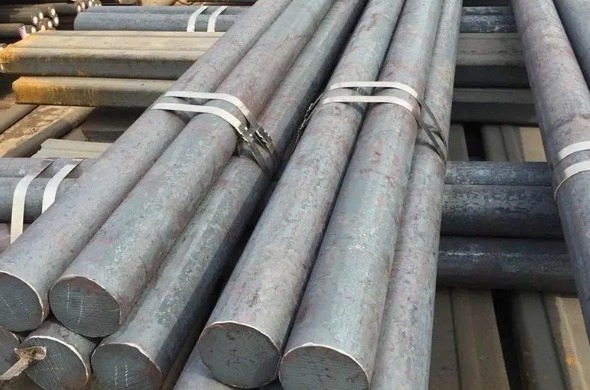
When you are managing a global supply chain for precision machinery or heavy infrastructure, the terminology of materials often creates unnecessary friction. One of the most frequent questions we receive at Chinaspecsteel from procurement leads and project engineers is: Is AISI 4140 truly the same as 42CrMo4? While these two grades are often listed as direct equivalents in your steel grade equivalents chart 2026, the reality is that they belong to different regulatory and technical ecosystems—the American ASTM system and the European EN system. For a B2B buyer, assuming they are identical can lead to minor but significant discrepancies in heat treatment results or structural performance.
The short answer to the procurement dilemma: Yes, they are interchangeable for the vast majority of industrial applications, including high-strength shafts, gears, and structural bolts. However, if your engineering specifications are tied to a specific certification—such as an API standard for oil and gas or an EN requirement for European machinery—the slight differences in molybdenum content and impurity limits become important. At Chinaspecsteel, we consult with international buyers daily to ensure they are sourcing the right Alloy Steel Round Bar that meets the specific hardening profile of their end application.
Comparison Table: AISI 4140 vs. 42CrMo4 Technical Data
| Parameter | AISI 4140 (ASTM A29) | 42CrMo4 (EN 10083-3) | Procurement Impact |
|---|---|---|---|
| Carbon (C) Content | 0.38% – 0.43% | 0.38% – 0.45% | 42CrMo4 has a slightly higher potential for hardness. |
| Chromium (Cr) Content | 0.80% – 1.10% | 0.90% – 1.20% | 42CrMo4 offers marginally better wear resistance. |
| Molybdenum (Mo) Content | 0.15% – 0.25% | 0.15% – 0.30% | Higher Mo in 42CrMo4 improves hardenability in large sections. |
| Impurity Limits (P & S) | Max 0.035% / 0.040% | Max 0.025% / 0.035% | 42CrMo4 often requires higher purity in the melt. |
| Hardenability Curve | Standard H-Band | Optimized Quenching | Both are ideal for quenching and tempering (Q&T). |
The Metallurgical Nuance: Why Molybdenum Matters
If you are looking at an Alloy Steel Round Bar wholesale price, you might wonder why a European mill certificate for 42CrMo4 sometimes carries a premium over a standard 4140 bar. Much of this comes down to the molybdenum (Mo) window. In AISI 4140, the Mo content is capped at 0.25%, whereas 42CrMo4 allows up to 0.30%. This extra 0.05% of molybdenum is not just a chemical footnote; it significantly improves the steel’s resistance to temper brittleness and ensures a more uniform 42CrMo4 yield strength after quenching in larger cross-sections.
For a project engineer, this means that if you are designing a shaft with a diameter over 100mm, the 42CrMo4 grade might provide a more consistent hardness profile from the surface to the core. At Chinaspecsteel, we take these nuances into account. When a customer asks for 4140, we provide material that is often “dual-certified,” meeting the chemistry requirements of both AISI 4140 and 42CrMo4. This allows our clients to use the material in both American and European markets without technical compromise.
Selection Logic: When to Specify 42CrMo4 over 4140
The decision of which grade to put on your RFQ often depends on where the machine will be serviced and which standards your quality control team follows. If your manufacturing facility is based in the United States and uses SAE/ASTM heat treatment protocols, sticking with AISI 4140 properties is the path of least resistance. The tooling, quenching temperatures, and tempering charts are all optimized for the 4140 chemistry.
Conversely, if you are exporting components to the European Union, specifying 42CrMo4 ensures compliance with CE marking and local mechanical standards. In the heavy machinery sector, 42CrMo4 is the preferred grade for parts that undergo significant abrasive wear or fatigue stress, such as excavator pins, hydraulic cylinder rods, and large industrial gear racks. By choosing the grade that matches the region’s most common standard, you simplify the procurement of replacement parts for your end customers. Chinaspecsteel maintains a vast inventory of both grades to support these global trade routes.
Sourcing from China: Quality Control in Special Steel
As a leading China special steel round bar wholesale provider, we know that the biggest concern for international buyers is material consistency. Sourcing 4140 or 42CrMo4 from a new supplier carries the risk of “chemistry drift,” where the material technically meets the broad standards but lacks the precision required for automated CNC machining or high-frequency induction hardening.
To mitigate this risk, procurement managers should demand more than just a basic mill certificate. At Chinaspecsteel, we provide comprehensive documentation for every batch of Alloy Steel Round Bar. This includes Jominy end-quench test results to verify hardenability, ultrasonic testing (UT) reports to ensure internal purity, and grain size analysis. When you source from a reliable China special steel manufacturer, you are not just buying a grade equivalent; you are buying the assurance that the 42CrMo4 yield strength after quenching will be within 5% of your design target across the entire shipment.
Processing Differences: Machinability and Welding
From a machine shop perspective, the difference between 4140 and 42CrMo4 is negligible. Both grades are considered “moderately difficult” to machine compared to low-carbon steels like 1018 or 1045. They are typically supplied in the annealed or normalized condition to ensure a hardness of approximately HB 217, which provides a good balance between tool life and surface finish. If your procurement goal is to reduce machining time, you might consider a “free-machining” variant with added sulfur, though this can negatively impact the impact toughness of the final part.
When it comes to welding, both grades require extreme caution. The high carbon and alloy content make them prone to cold cracking in the heat-affected zone (HAZ). Pre-heating to 250-350 degrees Celsius and post-weld stress relieving are mandatory. In our experience as a special steel supplier, we often advise clients to use mechanical fasteners or interference fits whenever possible for high-stress applications to avoid the metallurgical risks of welding these high-strength alloys. If welding is unavoidable, 42CrMo4 often provides a slightly more predictable response due to its tighter impurity controls.
Checklist for Sourcing AISI 4140 and 42CrMo4
Before you approve a bulk order of Alloy Steel Round Bar, ensure your procurement team has verified these five critical points:
- Dual Certification: Ask if the material can be certified to both ASTM A29 (4140) and EN 10083-3 (42CrMo4) to maximize inventory flexibility.
- Hardening Profile: Request a Jominy hardenability curve for the specific heat number to ensure it matches your quenching process.
- Inclusion Cleanliness: For high-fatigue parts, specify a maximum inclusion rating (e.g., ASTM E45) to prevent internal crack initiation.
- Surface Quality: Verify that the bars are free from deep seams or decarburization, which can cause failure during induction hardening.
- Length and Tolerance: Confirm the straightness tolerance (e.g., 1mm/meter) and diameter tolerance to ensure compatibility with your bar-feed CNC machines.
Frequently Asked Questions
1. Can I use 42CrMo4 instead of AISI 4140 without redesigning my part?
Yes. For nearly all mechanical designs, 42CrMo4 is a safe and often superior replacement for 4140. Its mechanical properties and response to heat treatment are so similar that it is often considered a “premium equivalent.”
2. What is the equivalent of 4140 in the Japanese JIS system?
The equivalent grade is SCM440. If you are sourcing from a Japanese mill or following a JIS-based blueprint, SCM440 is the grade you would typically see in the steel grade equivalents chart 2026.
3. Why is 4140/42CrMo4 called “chrome-moly” steel?
This is a common industrial shorthand. The “chrome” refers to chromium, which adds hardness and wear resistance, while “moly” refers to molybdenum, which improves hardenability and strength at high temperatures.
4. What is the typical hardness of 4140 after quenching and tempering?
Depending on the tempering temperature, 4140 can achieve a hardness range of HRC 28 to HRC 55. For most structural shafts, a “pre-hardened” range of HRC 28-32 is common to allow for machining while maintaining high strength.
5. Is 4140 suitable for low-temperature applications?
4140 has good toughness, but for extreme sub-zero environments (e.g., -40 degrees Celsius), 4340 is usually preferred due to its nickel content, which significantly improves the low-temperature impact energy.
6. How does the cost of 42CrMo4 compare to 4140 in China?
In the Chinese market, the price difference is usually minimal, as most large-scale mills produce these grades in such high volumes that the chemical variations are easily managed. The primary cost driver is the current market price of molybdenum and chromium ferro-alloys.
7. What is the maximum diameter for 4140 round bar that can be through-hardened?
Generally, 4140 can be through-hardened up to about 50mm to 75mm in an oil quench. For diameters larger than 100mm, the core will remain significantly softer than the surface, which is where the slightly better hardenability of 42CrMo4 or 4340 becomes an advantage.
8. Can I buy AISI 4140 in a square bar format?
Yes. While round bars are the most common, Chinaspecsteel also provides Alloy Steel Square Bar for custom tool holders, machinery bases, and high-strength industrial blocks.
9. Does 4140 require normalization before quenching?
It is highly recommended. Normalizing refines the grain structure and ensures a uniform response to the final quenching and tempering process, reducing the risk of distortion or cracking.
10. How long can I store 4140 round bars before they rust?
Like all low-alloy steels, 4140 will rust if exposed to moisture. At Chinaspecsteel, our bars are typically supplied with a light rust-preventative oil and can be stored in a dry warehouse for several months without significant oxidation.
At Chinaspecsteel, we understand that special steel procurement is a technical partnership. We don’t just supply raw materials; we provide the metallurgical expertise that allows you to source with confidence. Whether you are navigating the differences in a steel grade equivalents chart 2026 or looking for a reliable China special steel round bar wholesale partner, our team is ready to support your next project. Contact Chinaspecsteel today for a technical review of your alloy steel requirements and discover how our dual-certified materials can simplify your global supply chain.


 English